Colorimeter structures 45/0,0/45,8/d,d/8,what's the differences?How to choose?
The differences between the colorimeter structures 45/0, 0/45, 8/d, and d/8 lie in how the light source and detector are positioned relative to the sample. Here’s a breakdown:
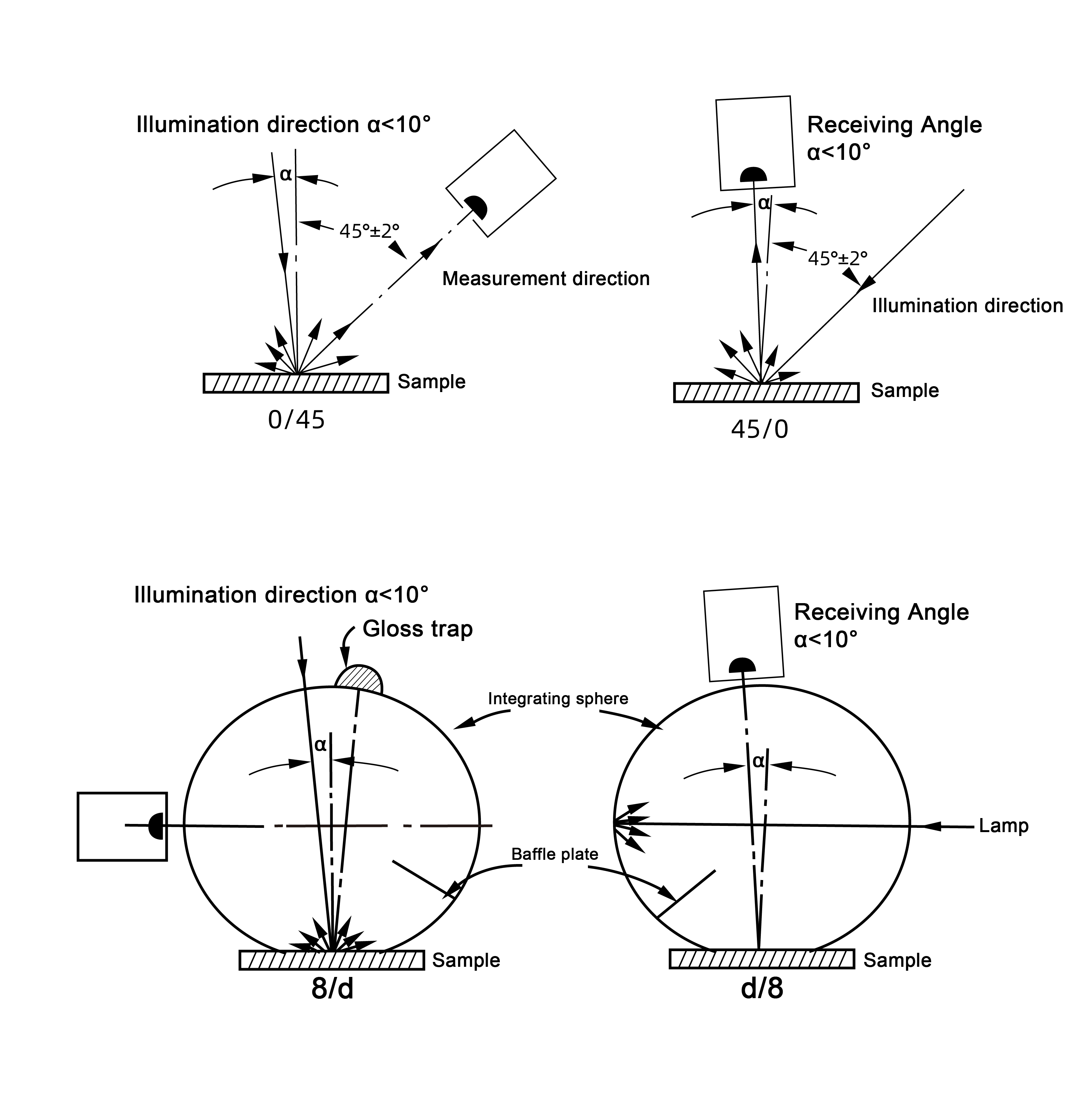
45/0 Structure:
Light Source: Positioned at a 45° angle to the sample.
Detector: Positioned at 0° (normal) to the sample.
Characteristics: This setup minimizes the effects of surface gloss and texture, making it suitable for materials like paints and printed items. It closely simulates how the human eye perceives color.
0/45 Structure:
Light Source: Positioned at 0° (normal) to the sample.
Detector: Positioned at a 45° angle to the sample.
Characteristics: Similar to the 45/0 structure, it is used to measure color while minimizing the influence of surface gloss and texture. The main difference is the positioning of the light source and detector.Very few applications
8/d Structure:
Light Source: Positioned at 8° to the sample.
Detector: Uses an integrating sphere to collect diffusely reflected light from all directions.
Characteristics: This setup is ideal for measuring materials with angle-dependent color changes, as it averages out the effects of surface texture and gloss. Commonly used for plastics, textiles, and other materials.This technology has been phased out and is still used by individual manufacturers
d/8 Structure:
Light Source: Uses an integrating sphere to diffusely illuminate the sample from all directions.
Detector: Positioned at 8° to the sample.
Characteristics: Similar to the 8/d structure, it is used for materials with angle-dependent color changes. The integrating sphere ensures uniform illumination, reducing the impact of surface texture and gloss.This is the type of colorimeter that is usually purchased
These different structures are chosen based on the specific requirements of the material being measured and the desired accuracy of the color measurement. If you have any more questions or need further details, feel free to ask!


How can we Help you?
Email*
Phone*
Name*
Country/Region*
Which Products are you interested in?*
Verification code